Portable Bidet
ME-141, Assistive Design
Professors Gary Leisk and Daniel Hannon
Spring, 2025
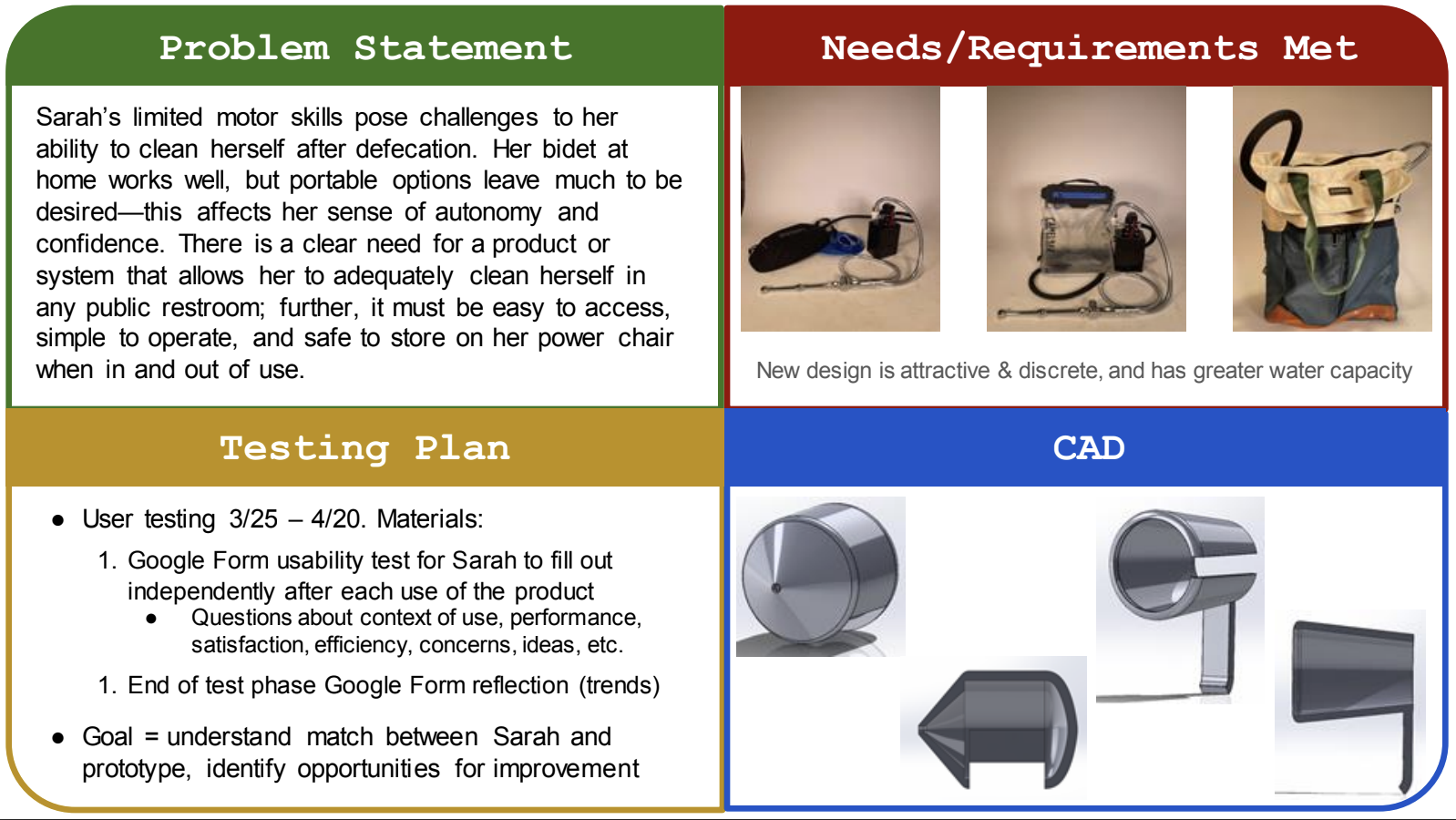
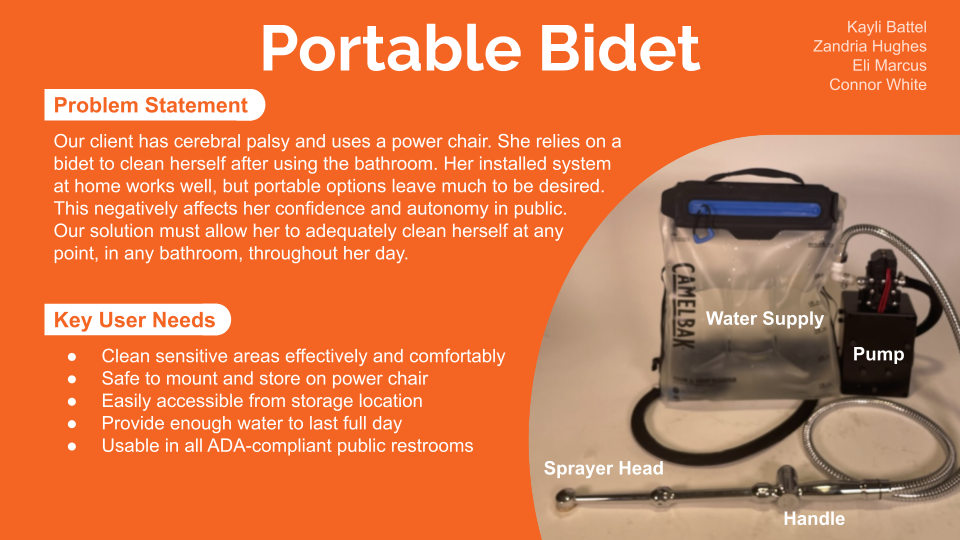
The Assistive Design class at Tufts University is unique in that students are assigned to a real client and spend the semester working to solve an issue in their lives. My team was assigned to a repeat-client, “Sarah.” Sarah is a woman with cerebral palsy who is getting married in 2026. One of the most difficult aspects of her life is that of using the restroom independently when in public places. As such, the problem statement she provided us with was that she wanted a discrete electronic portable bidet that she could bring with her into public restrooms in time to take with her on her honeymoon.
The portable bidet project is a multi-year project, so our team picked up where the team before us left off, made progress over the course of a semester, and left next year’s team with a guide of where to take the project to get the device to Sarah in time.
Design Progression
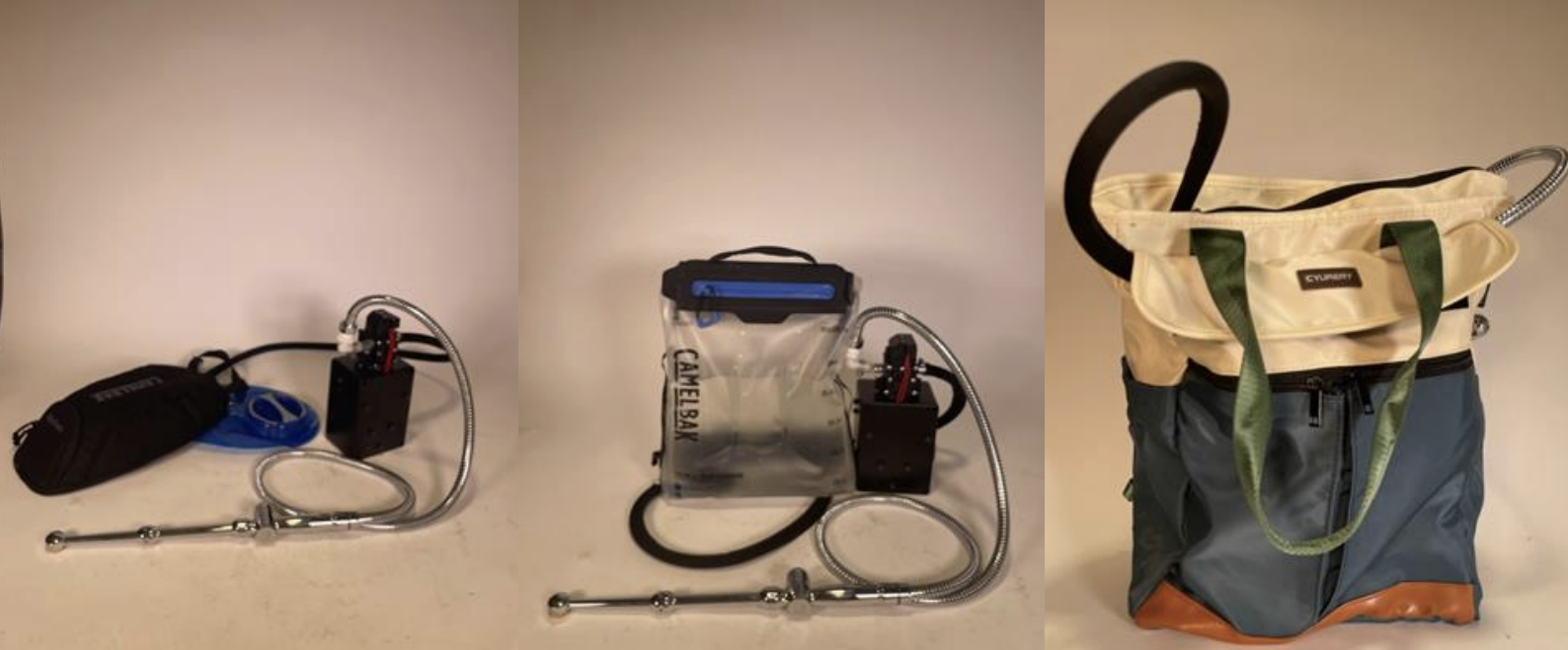
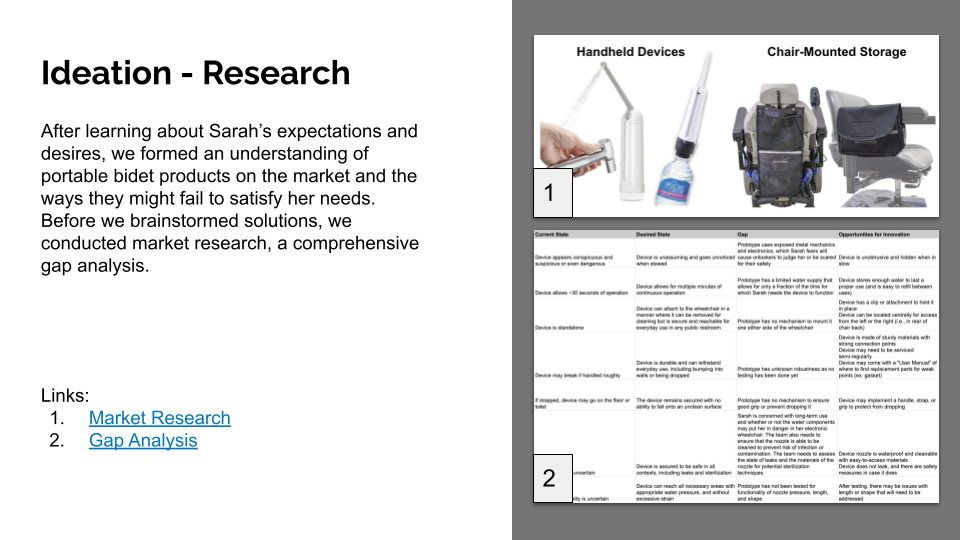
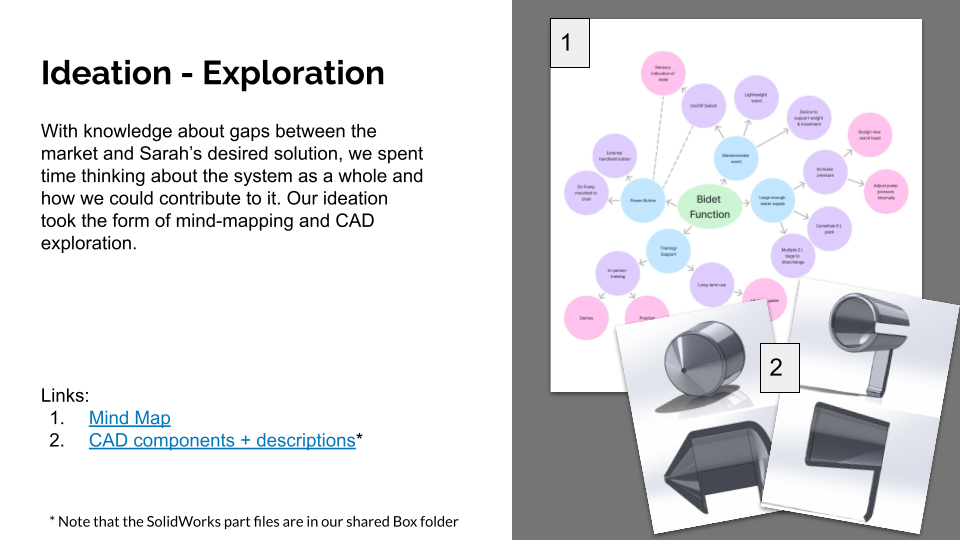
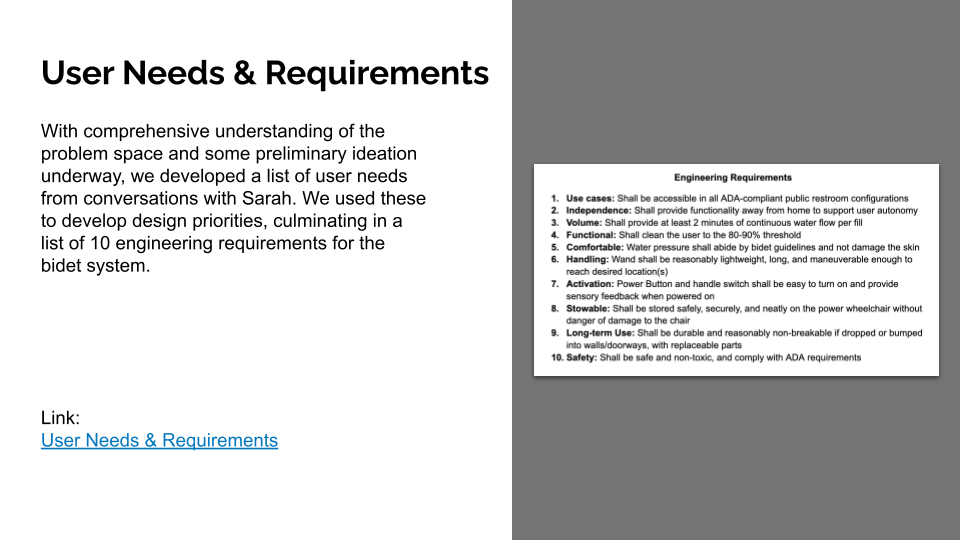
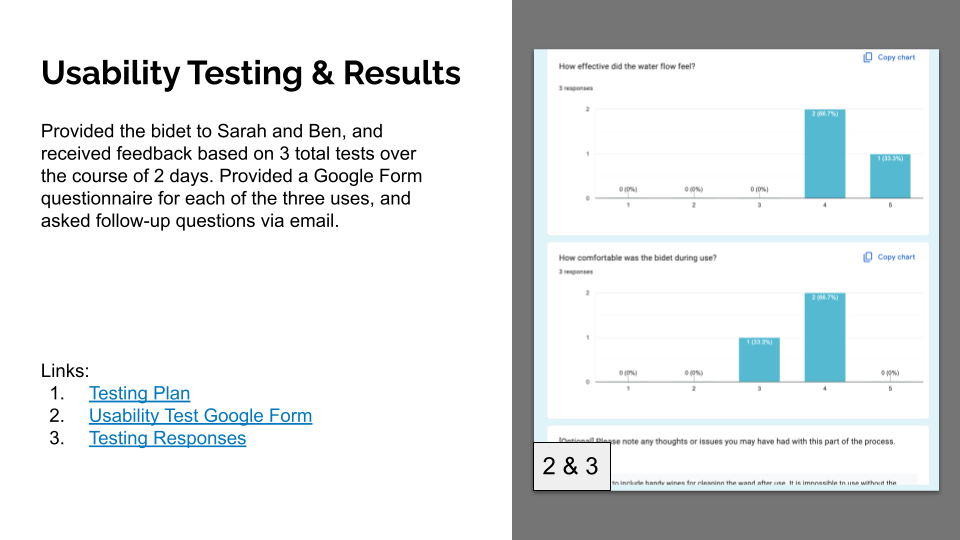
Over the course of the semester, we completed a series of human factors and mechanical engineering steps to address Sarah’s needs. We learned early on that Sarah wanted something with enough water storage for at least 2 minutes of uninterrupted use and packaging that would be discrete enough to avoid unwanted questions while in public. The team before us had worked on a very impressive pump system connected to a Camelbak water pouch, so we worked with Sarah to increase the water volume and begin the process of learning how to mount it on her wheelchair. During the semester, we were able to provide the device to her for its first ever human-testing… and it worked every time it was used! This testing, coupled with human factors principles and interviewing, gave us a detailed list of the exact steps needed to complete the product and get it to Sarah - and maybe someday others with mobility issues - for her day-to-day life.
Overall, the project was an incredible opportunity to empower Sarah with a sensitive issue that can be difficult to talk about. As the designated point person, I was responsible for talking with Sarah in a way that would make her feel comfortable sharing some very personal information, which gave me tremendous empathy for her situation. The project has a special place in my heart, not only because it allowed me to learn important skills and aspects of human factors engineering in a hands-on way, but more importantly because I saw how impactful human factors engineering can be and I felt that I was able to make a real difference in our client’s life by making her feel heard, seen, and hopeful. I can’t wait to hear about the finished product in the summer of 2026 when Sarah is able to take it with her on her honeymoon.
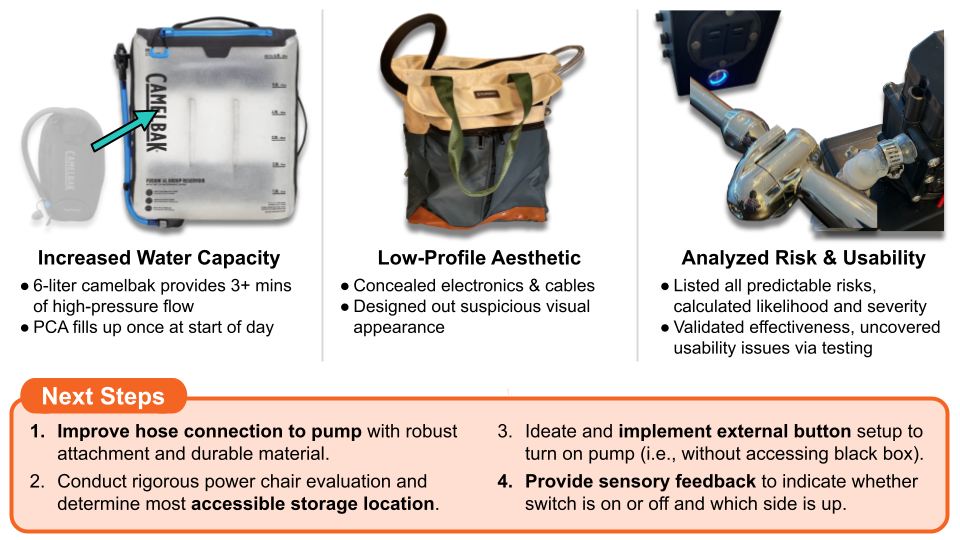
In addition to testing and improving the device’s effectiveness, we were able to address Sarah’s visual desires for the product by demonstrating that the device could be concealed. This was especially important to her because the first iteration had been what she called the “bomb bidet” and made her anxious that onlookers would think she was carrying suspicious electronics.
Final Presentation
At the end of the semester, we presented our progress over the course of the semester, in a 5-minute presentation, starting with the state of the project at the beginning and what Sarah needed from us.
Supporting Documentation
View our supporting documentation:
View our supporting documentation:
View our supporting documentation:
View our supporting documentation:
View our supporting documentation:
Usability Test Google Form
(link unfortunately deleted when teammate’s Tufts account was deactivated)
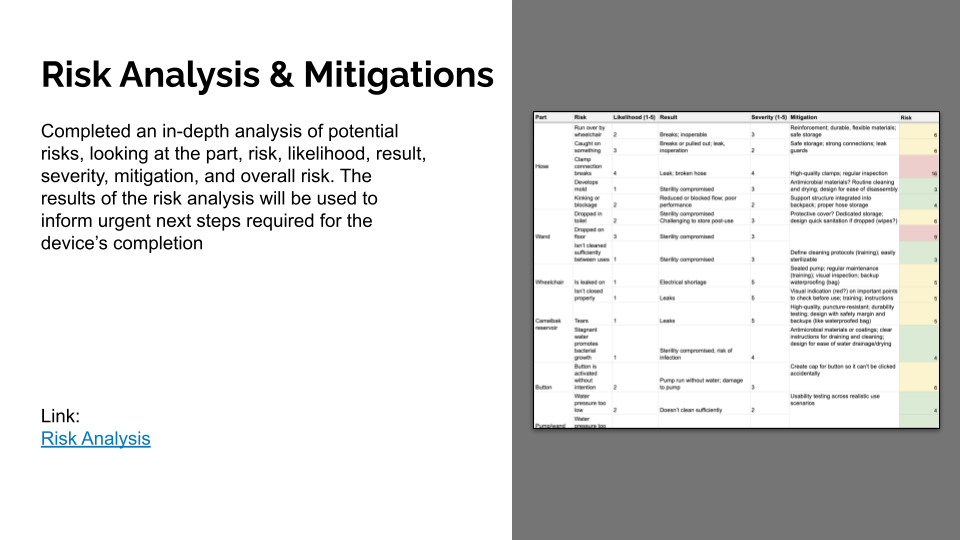
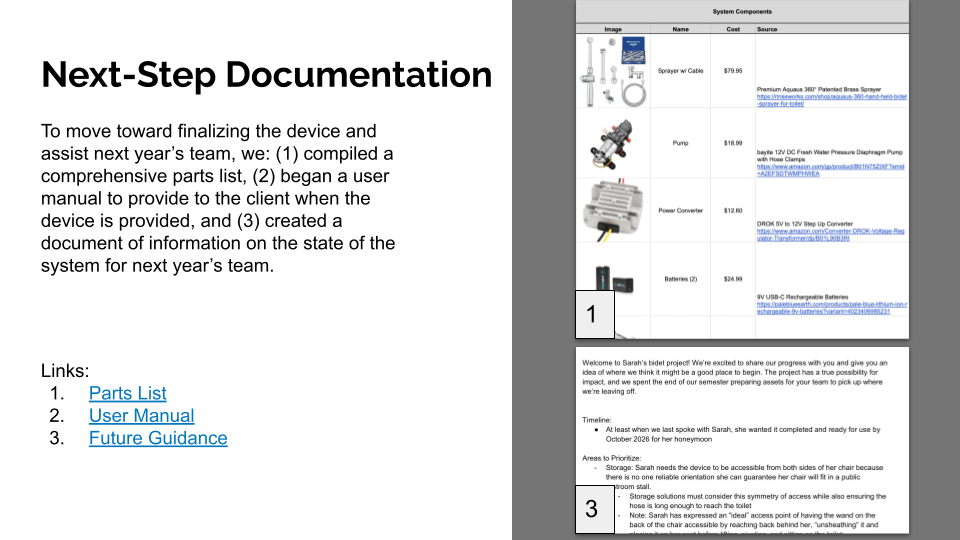
View our supporting documentation:
User Manual
(In-progress; to be completed and shared with finalized device)Future Guidance
(Provided for next year’s team)
Project Gates
〰️
Project Gates 〰️
Throughout the semester, we presented project “Gates,” or checkpoints. See the project progression here and click the images to open the PDF versions with supporting documentation, as applicable.
Gate 1: Project Pitch
Gate 2: Ideas & Direction
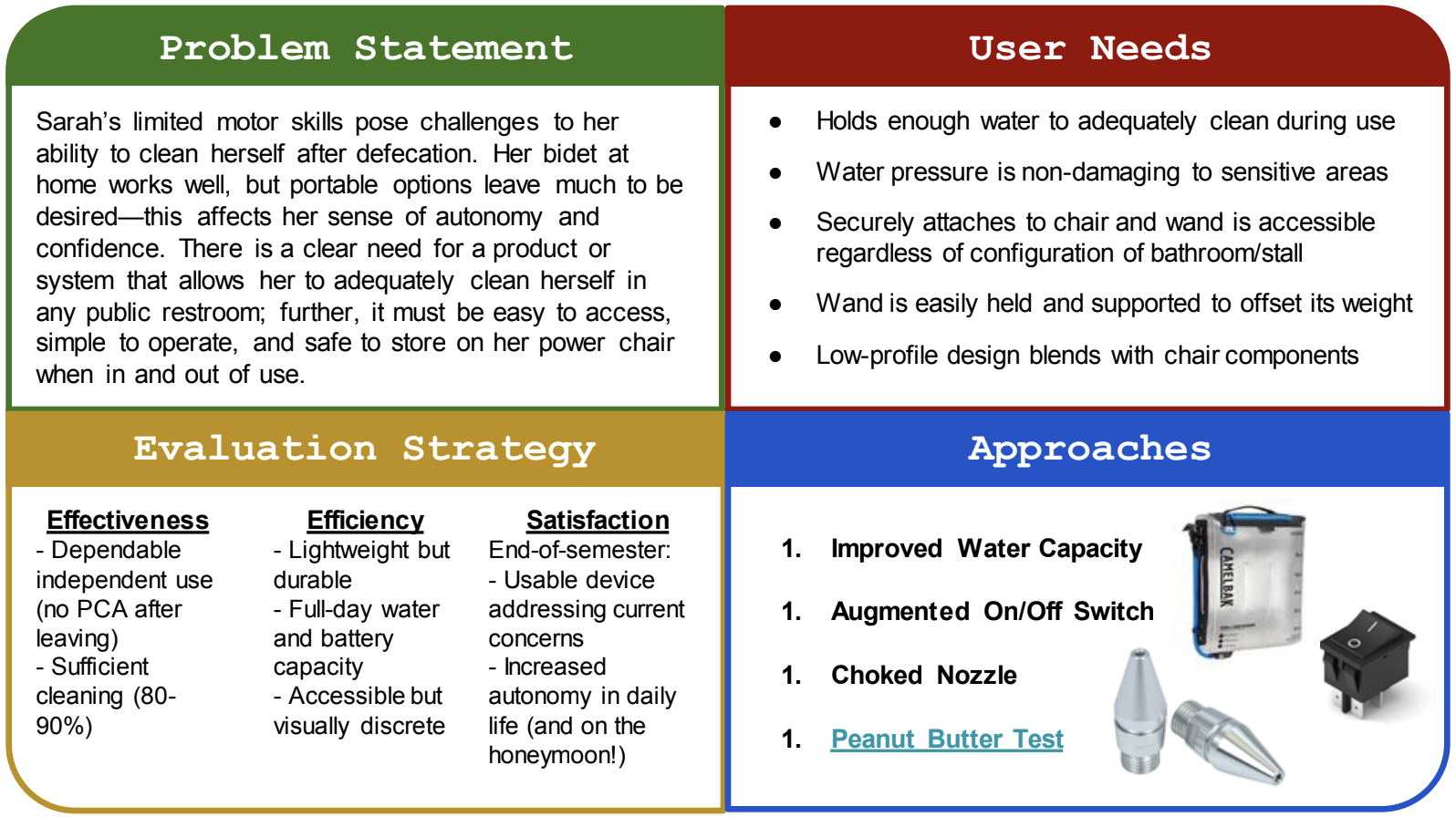
Gate 3: Prototype & Design Review